
Red Notice Arrest in the UK: Do the Police Act on It?
Will UK police arrest you on an INTERPOL Red Notice? A Red Notice is not a UK warrant — but provisional arrest is possible. How it works and what to do.

Yes, UK police can arrest you based on an INTERPOL Red Notice. But it’s not automatic. The notice itself is not a warrant. Far from it. The power to arrest is strictly regulated by UK law, primarily the Extradition Act 2003 and the Extradition (Provisional Arrest) Act 2020. For any action to happen, the National Crime Agency (NCA) must first review the request and issue a specific certificate—a crucial step that turns an international alert into a basis for lawful action in the United Kingdom. This article breaks down that legal process, the authorities involved, and what happens after a potential arrest.
INTERPOL Red Notice - an international alert circulated by INTERPOL requesting law enforcement worldwide to locate and provisionally arrest a person pending extradition, surrender, or similar legal action. It is not an international arrest warrant and is based on a valid national arrest warrant or court order issued by the requesting country.
So, What Exactly is an INTERPOL Red Notice?
A common misconception is that a Red Notice is an international arrest warrant. It is not. Think of it as an "international wanted persons alert," issued by INTERPOL only at the request of a member country. Its purpose is simple: to ask other member states to find and provisionally arrest someone, with a view to their extradition.
INTERPOL itself cannot compel any country, including the UK, to arrest the subject of a Red Notice. Each nation decides for itself what legal value to give the alert. In the UK, that decision-making process is handled by the National Crime Agency (NCA), which acts as INTERPOL's National Central Bureau and filters all incoming alerts through the lens of British law. The underlying basis must always be a valid arrest warrant or court decision from the requesting country.
What are the INTERPOL Red Notice requirements?
For a Red Notice to be valid, it must comply with INTERPOL's own rules. Article 3 of INTERPOL's Constitution is key, forbidding the organisation from undertaking any activities of a political, military, religious, or racial character. The notice must also be for a "serious extradition offence," typically one punishable by a minimum of one or two years of imprisonment, depending on the specific legal context.
Is there an INTERPOL Red Notice most wanted list?
No. INTERPOL doesn't have an official "top 10" or "most wanted list" like national agencies such as the FBI. While the media loves the phrase "INTERPOL most wanted," it is not an official designation. INTERPOL publishes only a tiny fraction of its Red Notices publicly; the vast majority are restricted for law enforcement use. Whether a notice is made public is a decision left to the member country that requested it.

How can I search the INTERPOL Red Notices database?
You can only search the public-facing section of the Red Notices database on INTERPOL's website. This contains just a small percentage of active notices. If you are worried that a non-public notice has been issued against you, the only reliable way to find out is to file a "Request for access" directly with the Commission for the Control of INTERPOL’s Files (CCF). The CCF is an independent body that handles data protection for INTERPOL.
When Can UK Police Legally Arrest Someone for a Red Notice?
In the UK, the police cannot arrest you simply because a Red Notice exists. The power for a provisional arrest—one made without a UK-issued warrant—comes from the Extradition (Provisional Arrest) Act 2020. This Act updated the Extradition Act 2003 and established a clear, two-step process.
A Request from a "Category 2" Territory: This power only applies to requests from trusted countries with which the UK has established extradition arrangements. These "Category 2" territories, specified by the Secretary of State, include nations like Australia, Canada, and the USA.
NCA Certification: The National Crime Agency (NCA) must review the alert. If it meets all legal requirements, the NCA issues a certificate under section 74B of the Extradition Act 2003. This certificate confirms the request is valid, relates to a serious extradition offence, and that an arrest is appropriate. This is not a rubber-stamp exercise; the NCA must be satisfied that the request is for an offence that would be prosecuted in the UK and isn't being pursued for trivial matters.
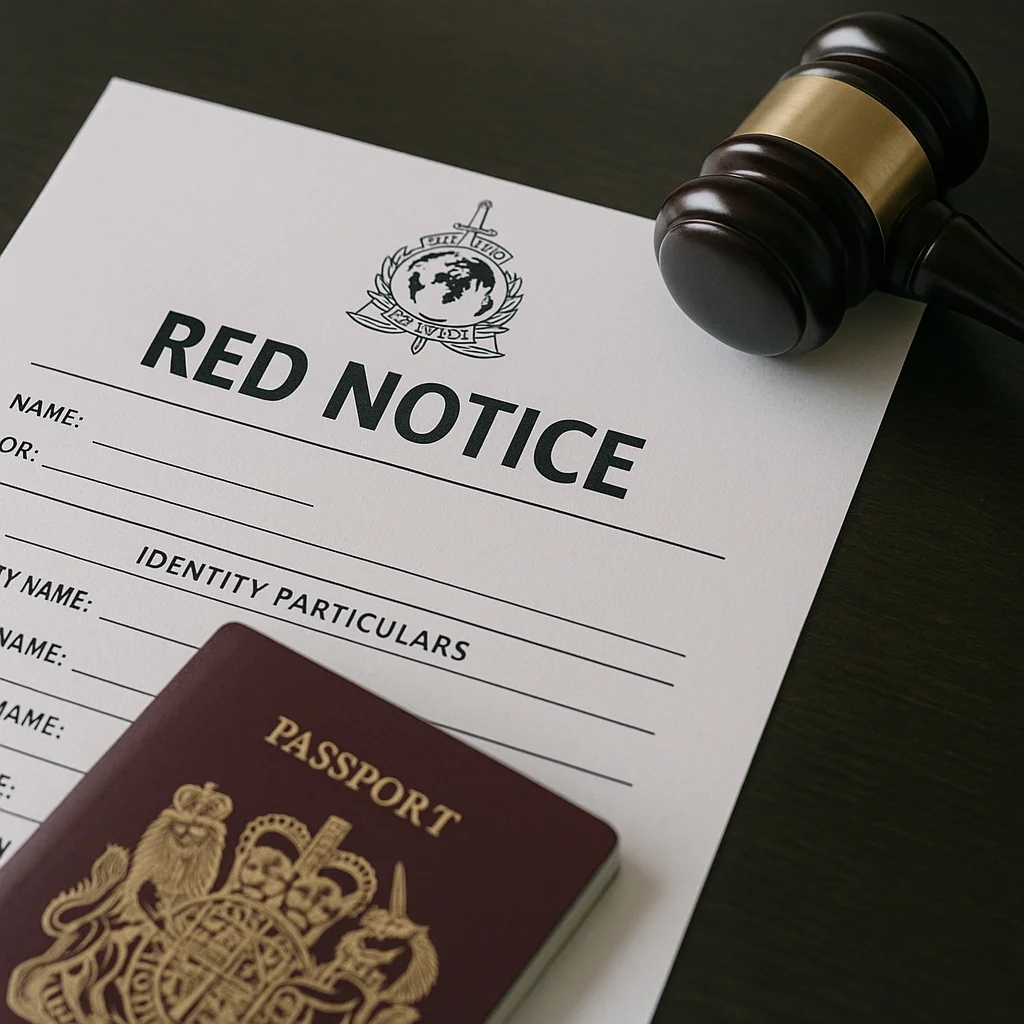
It is this s.74B certificate, not the Red Notice itself, that grants a UK police officer the legal power to make an arrest. Without it, the Red Notice is merely a piece of information. This is a critical safeguard in the complex UK extradition process.
What Happens After a Provisional Arrest in the UK?
A provisional arrest based on an NCA certificate triggers a strict legal timeline. The individual must be brought before Westminster Magistrates’ Court "as soon as practicable," which nearly always means the same or next day. At this initial hearing, the court decides on bail or remand in custody.
After that, the clock starts ticking for the country that requested the Red Notice. They must submit a formal, comprehensive extradition request through diplomatic channels within a prescribed time limit. The matter then proceeds to a full extradition hearing—a separate and often lengthy court battle.
Throughout this process, the individual is protected by UK law and the European Convention on Human Rights (ECHR). The court will examine not just the technicalities of the request but also whether extradition would violate fundamental rights, such as the right to liberty under Article 5 of the ECHR or the right to a fair trial. Any individual defending against politically motivated extradition has the right to raise these arguments before the UK courts.
Can a Red Notice Be Challenged or Removed?
Yes. A Red Notice is not permanent and can be challenged, especially if you believe it is abusive, politically motivated, or fails to comply with INTERPOL's own rules. There are two primary avenues for this, both handled by INTERPOL's independent review body, the Commission for the Control of INTERPOL’s Files (CCF).

Filing a Preventive Request: If you have good reason to believe a country might issue an abusive Red Notice against you, it is possible to file a preventive request with the CCF. This asks the Commission to proactively screen any data submitted by that country about you to ensure it complies with INTERPOL's rules before it is circulated.
Applying for Revision (Deletion): If a Red Notice already exists, you can file a detailed application with the CCF arguing for its deletion. The strongest arguments are that the notice violates INTERPOL's constitution—for instance, that it is for a political, military, religious, or racial matter (prohibited by Article 3), that it relates to a private dispute, or that the underlying legal case violates basic human rights.
Successfully removing a Red Notice can halt extradition proceedings in their tracks and restore your freedom of movement. If you need support with this process, our specialist lawyers can help.
⚠️ Time is critical — every day matters
Get a free case assessment
Our team specialises in cases with an international element. We review applicable treaties, assess risks, and prepare an action plan.
This article is published by an independent law firm for informational purposes only and does not represent or claim affiliation with any government body, international organization, or official authority.
Facing an INTERPOL Red Notice in the UK?
Speak to a specialist Red Notice solicitor — free, confidential case review.
Request a free case reviewFrequently asked questions
Will UK police arrest you on an INTERPOL Red Notice?
A Red Notice alone is not a UK arrest warrant. Any UK action follows the Extradition Act, which can include provisional arrest in defined circumstances.
How does provisional arrest work in the UK?
In defined circumstances a person can be provisionally arrested pending a formal extradition request and the court process.
Does the UK act on every Red Notice?
No. The UK assesses requests against its law and human-rights obligations; not every notice leads to action.
What should you do if you are at risk in the UK?
Get specialist legal advice early. A solicitor can challenge the notice via the CCF and prepare an extradition defence.